The Stash
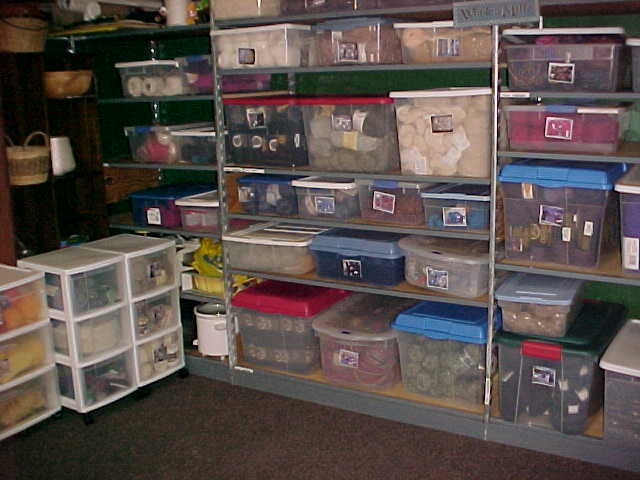
Looking at the old photos of my mother’s basement, you’d see a masterclass in organization. An entire wall was lined with shelves of bin after bin full of yarn, each sorted by color. On the front of every bin was a top-down photo of exactly what lived inside. It wasn’t just a stash; it was a curated archive.
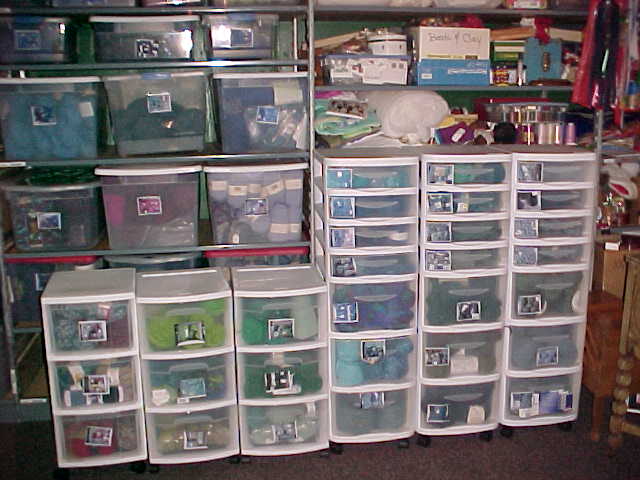
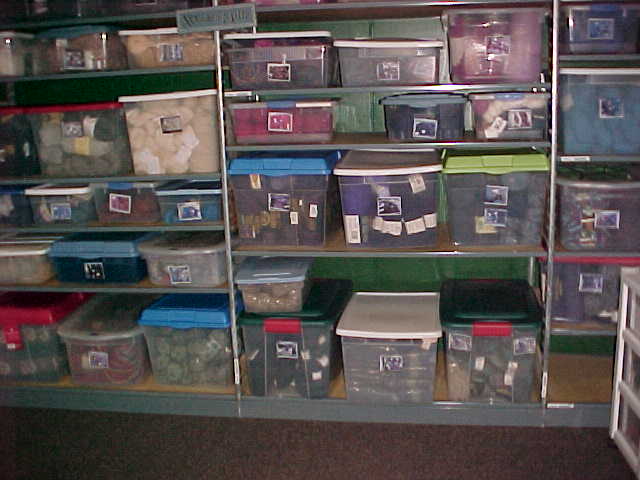
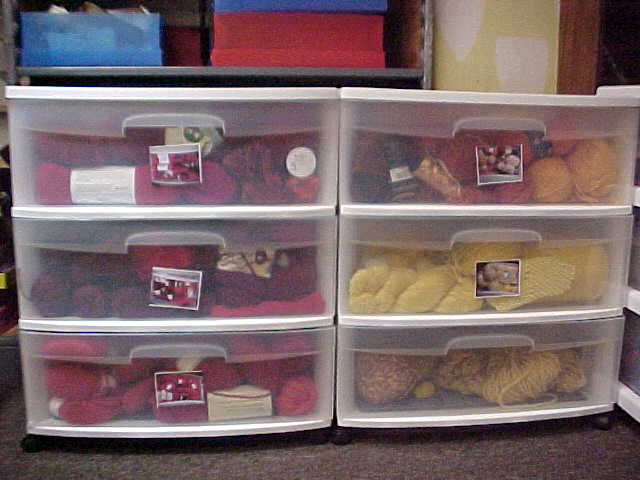
There was another pile of bins full of knitted UFO’s – Unfinished Objects – each neatly stashed with started project still on the needles, some notions, and the pattern in a zipped up bag.
Then there were the binders—meticulously numbered knitting patterns corresponding to numbered project bins full of hundreds of projects frozen in time, waiting for a finish line that hadn’t come yet.
For the past few months, I’ve been the one to step into that archive. I bring the bins of half-finished knits from her basement to my house one carload at a time to sort through. The destash process is much more clinical—and emotional—than I ever expected.
It has given me an insight into my mother’s knitter brain. She rarely made anything as directed in the pattern. And it became clear why each project was abandoned – she got bored, she did not get gauge (who has time for a gauge swatch anyway?), the pattern got overly complicated, or occasionally there would be a mistake that she just didn’t want to fix.
The Anatomy of a Decision
Going through the “Started Projects” bins feels like an interview with the past. For every project I pull out, I have to ask a series of technical and personal questions:
- Is it almost done? If it’s a sleeve away from completion, is it a piece of her I want to finish for her? She is not knitting anymore these days, but she does still enjoy wearing handknits.
- Is it “Me”? Is this a design I would actually wear, or is it better suited for someone else’s wardrobe?
- Is the yarn the treasure? Sometimes the project isn’t the point, but the fiber is. Do I frog it and save the yarn for a future design of my own?
- Is it time for a new home?
Currently, about 90% of what I find falls into that final category.
The Ritual of the Cut
There is a specific sound to this stage of the project: the snip of scissors. To move forward, I have to be decisive. I cut the yarn, slide the needles out of the live stitches, and separate the materials.
The needles go into a bin to be sorted later. The yarn goes to the photography station to be listed on eBay. And the started objects? They go into a pile on a chair in the corner of my room.
That pile is currently taller than I am.
Seeing that mountain of knitted fabric—thousands of hours of my mother’s handiwork—is a staggering visual. It represents decades of creativity, but also the weight of “unfinished business.” By dismantling these projects, I’m not erasing her work; I’m releasing the materials to become something new.
Rehoming the History
Selling this yarn on eBay has become a secondary job. My house is a sea of bins at various stages of the process, but there is a profound satisfaction in seeing a 25-year-old skein of wool head off to a buyer in another state.
I’m only about halfway through. The wall of color-coded bins still watches me, waiting for their turn. But with every listing and every reclaimed yarn, the basement—and my own house—gets a little lighter.